
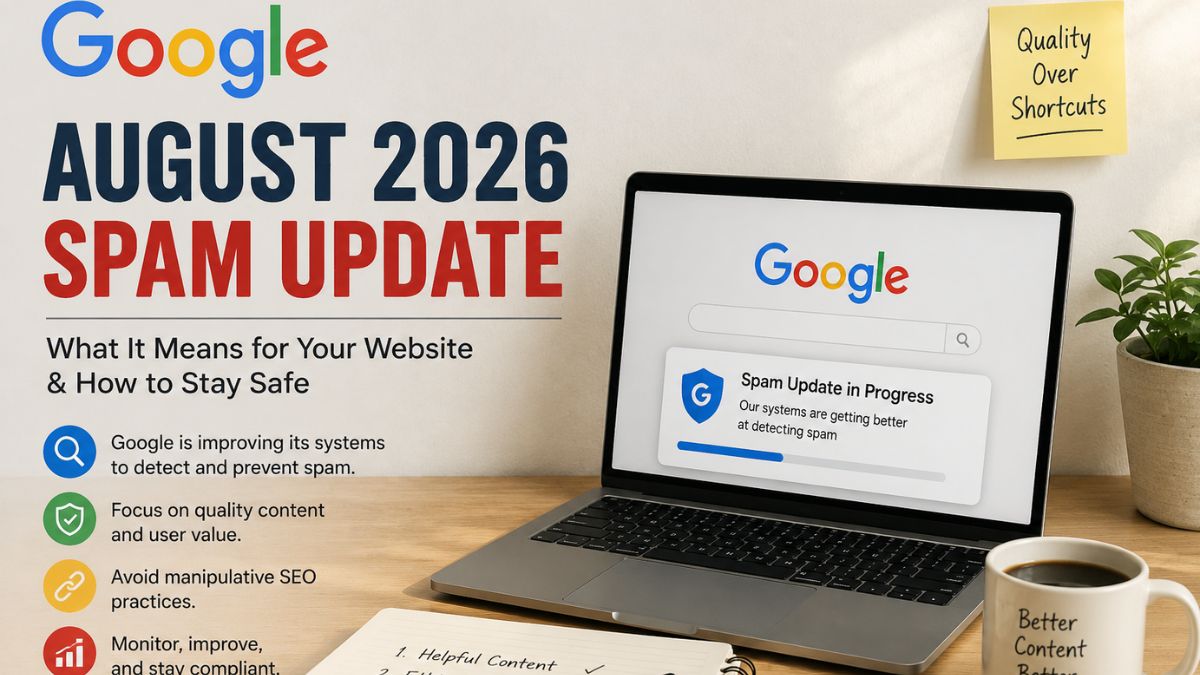
Google has started rolling out its August 2026 Spam Update from August 18, 2026. The update is being rolled out globally and applies to all languages. Google says the rollout may take a few days to complete.
This update is designed to improve Google’s ability to detect websites and content that use spammy or manipulative SEO practices.
What Does the Update Mean?
A spam update is different from a Google Core Update. It mainly focuses on identifying practices that violate Google’s spam policies.
Website owners should pay attention to practices such as:
- Keyword stuffing
- Low-quality or copied content
- Large amounts of automatically generated content
- Doorway pages
- Manipulative link-building
- Deceptive website techniques
This does not mean that every website using AI-generated content will be penalized. The important thing is whether the content is useful, original, accurate, and created to help people.
Is the August 2026 Spam Update Global?
Yes.
Google has confirmed that the August 2026 Spam Update applies:
- Globally
- To all languages
- Across Google Search rankings
The rollout is still in progress, so ranking fluctuations during the rollout should not automatically be interpreted as a permanent penalty.
Spam Update vs. Core Update: What’s the Difference?
This is an important distinction.
A core update broadly changes Google’s ranking systems and can affect how Google evaluates the relevance and quality of content.
A spam update, on the other hand, is focused on Google’s systems for detecting search spam.
Google explains that websites affected by spam updates should review its spam policies. Sites that violate those policies may rank lower or potentially disappear from search results.
Therefore, if your rankings suddenly change during the August 2026 Spam Update, don’t immediately assume that Google has decided your content is generally poor. First investigate whether your website has practices that could conflict with Google’s spam policies.
What If Your Rankings Drop?
Don’t panic if you notice a ranking or traffic change while the update is rolling out.
First, check Google Search Console and compare your clicks, impressions, and rankings with previous weeks.
Then review your website for thin, duplicate, outdated, or low-value pages. Improve content where necessary and make sure your website follows Google’s spam policies.
Also check basic technical SEO elements such as indexing, canonical tags, redirects, robots.txt, and broken pages.
How Can You Stay Safe?
The best way to protect your website from spam updates is simple:
Create useful content for people, not just search engines.
Focus on original information, helpful answers, natural keyword usage, good user experience, and ethical SEO practices.
Google’s August 2026 Spam Update is a good reminder that quality and user value should always come first in SEO.
Conclusion
Don’t chase every algorithm update. Build a trustworthy website, publish genuinely helpful content, and avoid shortcuts designed only to manipulate rankings. This approach can help your website stay stronger as Google continues improving its search systems.