
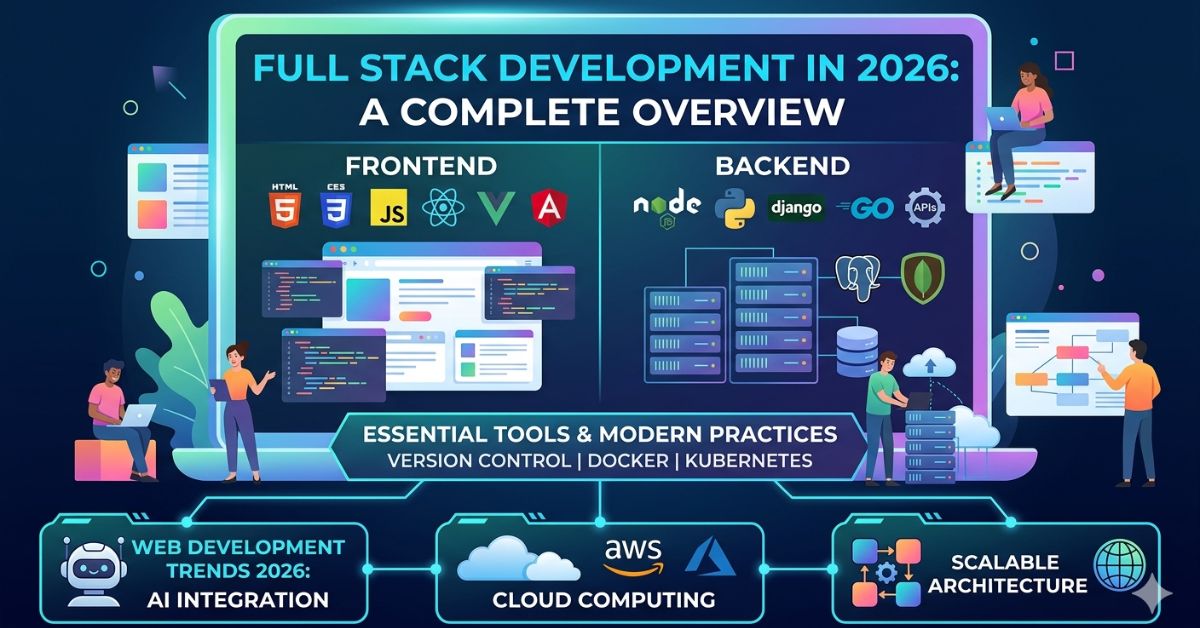
Full stack development continues to be one of the most in-demand skills in the tech industry in 2026. With businesses rapidly shifting online, the need for developers who can handle both frontend and backend development has grown significantly. A full stack developer is someone who can build complete web applications from designing user interfaces to managing servers, databases, and APIs.
This guide will help you understand everything about full stack development in 2026, including the skills, tools, technologies, and future trends in this field.
What is Full Stack Development?
Full stack development refers to the process of building both the frontend (client-side) and backend (server-side) of a web application.
- Frontend development deals with everything users see and interact with in a browser.
- Backend development handles data processing, server logic, authentication, and database operations.
A full stack developer is skilled in both areas and can develop a complete web application independently or as part of a team.
Frontend Development in 2026
Frontend development has evolved significantly with modern frameworks and tools. In 2026, developers are expected to build fast, responsive, and highly interactive user interfaces.
Key Frontend Technologies:
- HTML5, CSS3, JavaScript (core fundamentals)
- React.js, Angular, or Vue.js
- Next.js for server-side rendering and SEO-friendly apps
- Tailwind CSS for modern UI design
Modern web development trends in 2026 focus heavily on performance optimization, accessibility, and mobile-first design. Developers also need a strong understanding of UI/UX principles to create user-friendly interfaces.
Backend Development in 2026
Backend development is the backbone of any web application. It ensures that data flows correctly between the server, database, and frontend.
Popular Backend Technologies:
- Node.js (JavaScript runtime)
- Python (Django, Flask)
- Java (Spring Boot)
- PHP (Laravel)
- Go (Golang) for high-performance systems
Backend developers in 2026 are expected to build scalable systems, secure APIs, and efficient databases. Understanding RESTful APIs and GraphQL is essential for modern backend development.
Databases and Data Management
Every full stack application relies on databases to store and manage data.
Common Databases:
- MySQL
- PostgreSQL
- MongoDB (NoSQL)
- Firebase (real-time database)
In 2026, developers must understand both SQL and NoSQL databases, along with optimization techniques like indexing and caching for better performance.
Essential Tools for Full Stack Developers
To become a successful full stack developer in 2026, mastering tools is just as important as learning programming languages.
Key Tools:
- Git & GitHub (version control)
- Docker (containerization)
- Kubernetes (orchestration)
- VS Code (code editor)
- Postman (API testing)
- CI/CD tools like Jenkins or GitHub Actions
These tools help streamline the software development lifecycle (SDLC) and improve productivity.
Full Stack Development Workflow
A typical full stack development process includes:
- Requirement Analysis
- UI/UX Design
- Frontend Development
- Backend Development
- Database Integration
- API Development
- Testing and Debugging
- Deployment
- Maintenance and Updates
Understanding this workflow is essential for building real-world applications efficiently.
Skills Required to Become a Full Stack Developer
To succeed in full stack development in 2026, you need a combination of technical and soft skills:
Technical Skills:
- Proficiency in JavaScript
- Understanding of frontend and backend frameworks
- Database management
- API development
- Version control (Git)
Soft Skills:
- Problem-solving ability
- Logical thinking
- Communication skills
- Continuous learning mindset
Future of Full Stack Development
The future of web development in 2026 and beyond is driven by automation, AI integration, and cloud computing. Full stack developers are now expected to work with:
- AI-powered development tools
- Serverless architecture
- Cloud platforms like AWS, Azure, and Google Cloud
- Microservices architecture
Developers who adapt to these trends will stay highly relevant in the evolving tech ecosystem.
Conclusion
Full stack development in 2026 is more powerful and dynamic than ever before. With the right skills in frontend, backend, databases, and tools, anyone can build complete, scalable web applications.
Whether you’re a beginner or an experienced developer, mastering full stack development skills opens the door to endless opportunities in the tech world.The key is simple keep learning, keep building, and stay updated with modern web development trends.