
If you’re working on improving your website’s SEO, you’ve probably come across the terms Schema Markup and Structured Data. While many people use these terms interchangeably, they are not exactly the same. Understanding the difference can help you optimize your website for better visibility, rich results, and improved search engine performance.
In this guide, we’ll explain the difference between schema markup and structured data, why they matter for SEO, and how implementing them can improve your website’s rankings.
What Is Structured Data?
Structured Data is a standardized format used to organize and describe the content on a webpage. It helps search engines like Google understand what your content is about instead of simply reading the text.
For example, structured data can identify whether a page is about:
- A local business
- A product
- A blog article
- An event
- An FAQ
- A recipe
- A review
By providing this context, structured data makes it easier for search engines to crawl, index, and display your content accurately.
What Is Schema Markup?
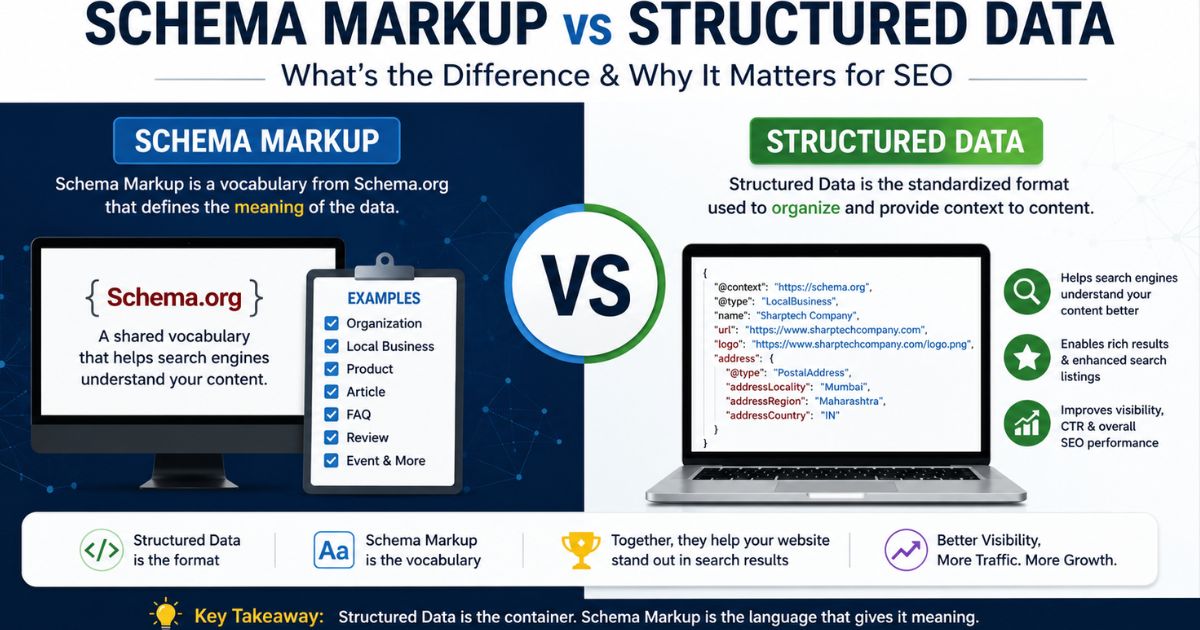
Schema Markup is a specific vocabulary developed by Schema.org that is used to create structured data. In simple terms:
- Structured Data is the format.
- Schema Markup is the vocabulary that defines what the data means.
Today, the most recommended implementation method is JSON-LD, which Google officially supports because it’s easy to maintain and doesn’t interfere with your webpage’s HTML.
Schema Markup vs Structured Data
Although they work together, they serve different purposes.
| Structured Data | Schema Markup |
| Organizes information for search engines | Defines the meaning of that information |
| Uses formats like JSON-LD, Microdata, or RDFa | Uses the Schema.org vocabulary |
| Helps search engines understand page content | Enables rich results and enhanced search listings |
| Technical framework | Standardized markup language |
Think of it this way: Structured Data is the container, while Schema Markup is the language inside that container.
Why Are They Important for SEO?
Implementing schema markup correctly offers several SEO benefits:
- Improves website visibility in Google Search.
- Helps qualify pages for rich results.
- Increases click-through rates (CTR).
- Improves search engine understanding of your content.
- Supports technical SEO and website optimization.
- Enhances local SEO for businesses.
- Strengthens visibility in AI-powered search experiences.
While schema markup is not a direct Google ranking factor, it improves how your pages appear in search results, which can indirectly increase traffic and engagement.
Common Types of Schema Markup
Businesses should consider implementing:
- Organization Schema
- Local Business Schema
- Product Schema
- Article Schema
- FAQ Schema
- Breadcrumb Schema
- Review Schema
- Service Schema
- Event Schema
- Video Schema
Choosing the right schema depends on your website and the type of content you publish.
Best Practices
To get the best SEO results:
- Use JSON-LD whenever possible.
- Validate your structured data before publishing.
- Keep schema information accurate and up to date.
- Add only relevant schema types to each page.
- Avoid spammy or misleading markup.
- Regularly monitor your rich results in Google Search Console.
Final Thoughts
Understanding the difference between Schema Markup and Structured Data is essential for building a search-friendly website. Structured data provides the framework, while schema markup supplies the vocabulary that helps search engines interpret your content correctly. Together, they improve search visibility, support technical SEO, and increase the chances of earning rich results.
At Sharptech Company, we specialize in technical SEO, website optimization, schema markup implementation, SEO audits, and digital marketing services that help businesses improve their online presence. Whether you’re running an e-commerce store, a local business, or a corporate website, implementing the right structured data strategy can give your SEO a significant advantage.